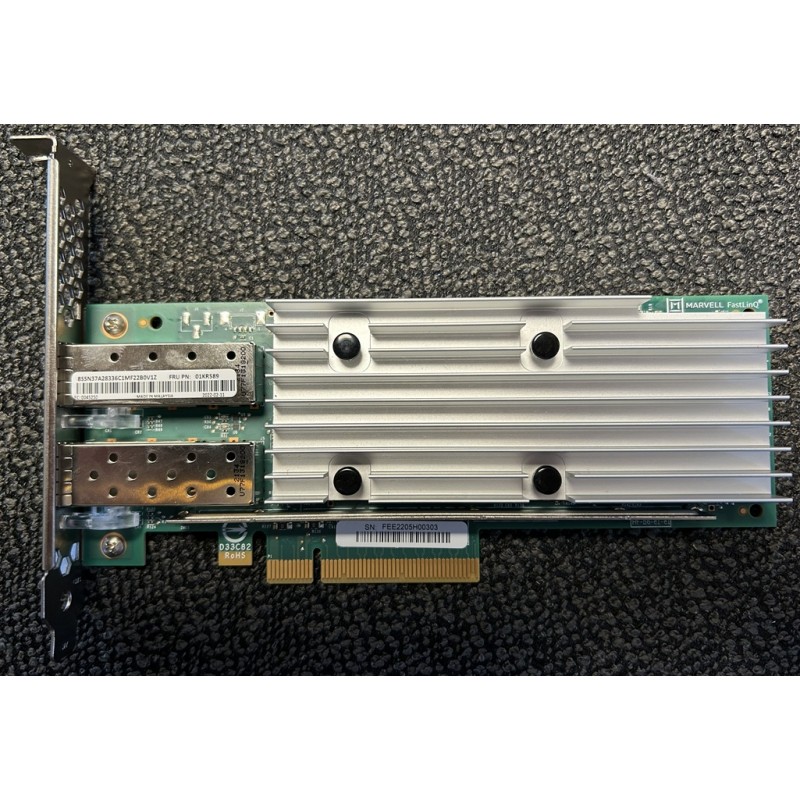
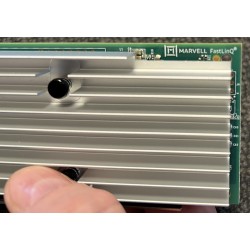
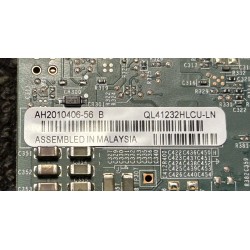
The Marvell QL41232 10/25GbE SFP28 Ethernet Adapters are based on eighth-generation technology from Marvell and feature Universal Remote Direct Memory Access (RDMA) to offer concurrent support for RoCE, RoCE v2, and iWARP. They are suitable for existing 10Gb customers who want to maintain 10Gb network support and want the investment protection of supporting 25GbE network speeds, but don't need FCoE or iSCSI support.
This product guide provides essential presales information to understand the adapter and its key features, specifications, and compatibility. This guide is intended for technical specialists, sales specialists, sales engineers, IT architects, and other IT professionals who want to learn more about Marvell 25 GbE network adapters and consider their use in IT solutions.
Specifications
The adapter has the following technical specifications:
Marvell FastlinQ 41000 ASIC
PCIe 3.0 x8 host interface
Available in PCIe low profile and OCP 3.0 form factor
Supports Message Signal Interrupt (MSI-X)
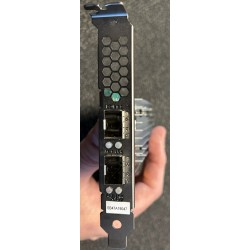
Two SFP28 external connectors supporting a transceiver, direct-attach copper (DAC) cable or active optical cable (AOC).
Support for PXE boot, iSCSI boot and Wake-on-LAN (WOL)
Networking Features
Jumbo frames (up to 9600-Byte)
802.3x flow control
Link Aggregation (IEEE 802.1AX-2008)
Virtual LANs-802.1q VLAN tagging
Configurable Flow Acceleration
Congestion Avoidance
IEEE 1588 and Time Sync
Forward Error Correction Clause 74, Clause 91 support over 25 Gbps
Performance
Data Plane Development Kit (DPDK) support
Maximum 60 Million packets per second
Low latency
25Gbps line rate per-port in 25GbE mode
10Gbps line rate per-port in 10GbE mode
Stateless Offload Features
IP, TCP, and user datagram protocol (UDP) checksum offloads
TCP segmentation offload (TSO)
Large send offload (LSO)
Giant send offload (GSO)
Large receive offload (LRO) (Linux)
Receive segment coalescing (RSC) (Windows)
Receive side scaling (RSS)
Transmit side scaling (TSS)
Interrupt coalescing
Virtualization
VMware NetQueue support
Microsoft Hyper-V VMQ support (up to 208 dynamic queues)
Linux Multiqueue support
PCI SIG SR-IOV compliant with support for 192 Virtual Functions
Virtual NIC (vNIC) / Network Partitioning (NPAR) with support for up to 16 physical functions
Unified Fabric Protocol (UFP) with support for up to 16 physical functions